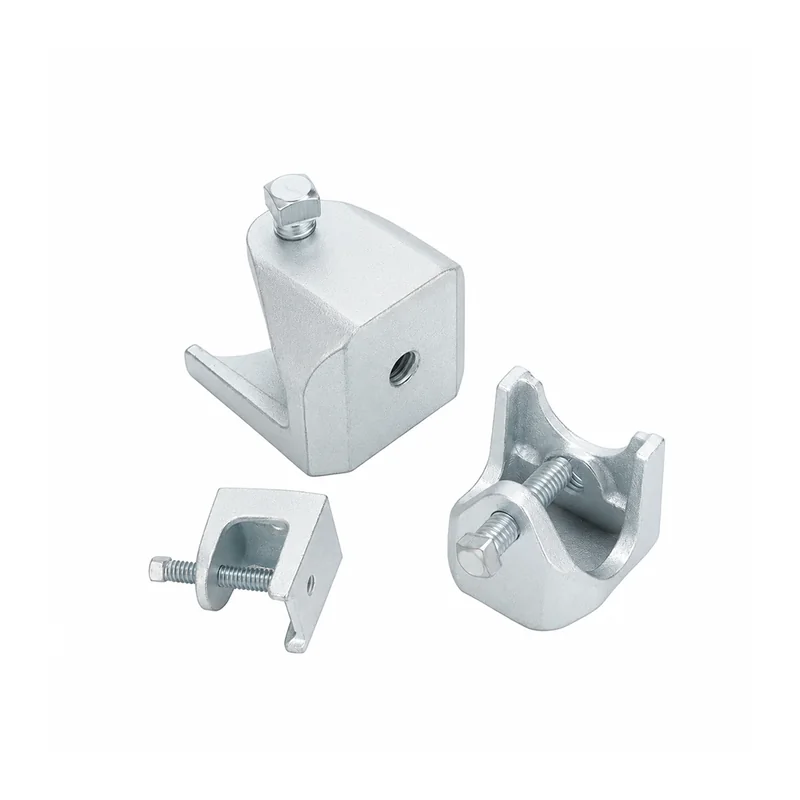
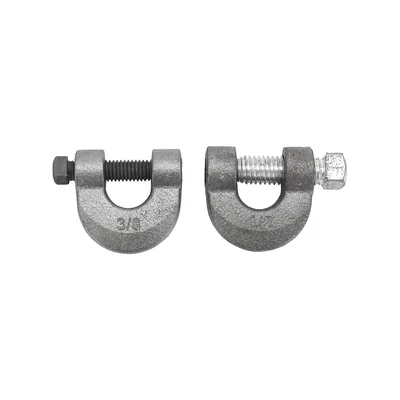
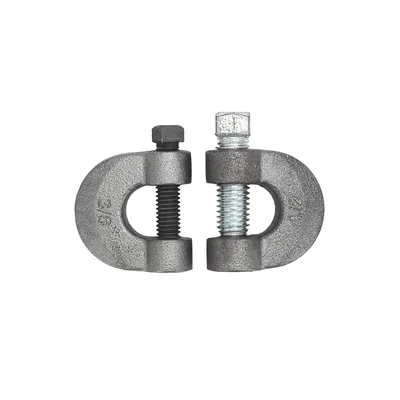
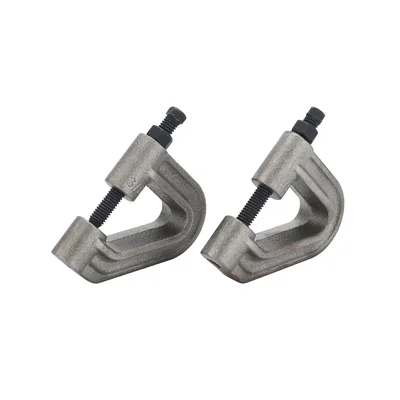
Heavy-Duty Design Review“Heavy duty” is a design category, not a transferable load rating.
Heavy-duty clamps may use a larger body section, more robust screw or engineered attachment to thicker flanges, but the name supplies no allowable load. Match the exact model and revision to flange geometry, mounting face, rod size, load direction, eccentricity, vibration, corrosion exposure and safety basis. Request verified finished-assembly data; never derive capacity from material tensile strength or body weight.
Ductile iron to ASTM A536 — Ductile Iron Castings is a common route where greater ductility than gray iron is needed; ASTM A47/A47M malleable iron and controlled forged or fabricated steel are alternatives. The drawing should control minimum sections, fillets, thread engagement, screw properties, heat treatment, discontinuity criteria and coating. Coupon properties do not prove the capacity of the finished clamp.
Provide tool clearance and avoid side loading from a misaligned rod. Seat the clamp on sound steel within its approved range, use the specified screw orientation and tightening method, and assess fireproofing or coating at the contact zone. The steel, clamp, rod, nuts, hanger and equipment form one load path; the lowest verified component or connection governs.
Research sources: MSS SP-58, Pipe Hangers and Supports—Materials, Design, Manufacture, Selection, Application, and Installation; NFPA 13; ASTM A536 and ASTM A47/A47M. Accessed August 1, 2026.